Newsletter · Work, Money & Adaptation
What Becomes More Expensive When a Security Team Cannot Coordinate AI Agents?
The question I keep returning to
Standard security teaching still centers on a familiar sequence: understand the system, identify weaknesses, write detections, investigate alerts, and apply fixes before an adversary does. The work is framed as a race between people studying the same surfaces.
That framing is under pressure. Agents can now explore large attack surfaces, chain low-severity issues into usable paths, and continue for hours without a human directing every step. The same class of tools is appearing on both sides of the fence.
When I look at recent comments from people building and defending these systems, I keep coming back to a different question: what becomes more expensive when a security team cannot coordinate agents under real operational constraints?
That question is what led me to look at both the defensive and offensive use of multi-agent systems.

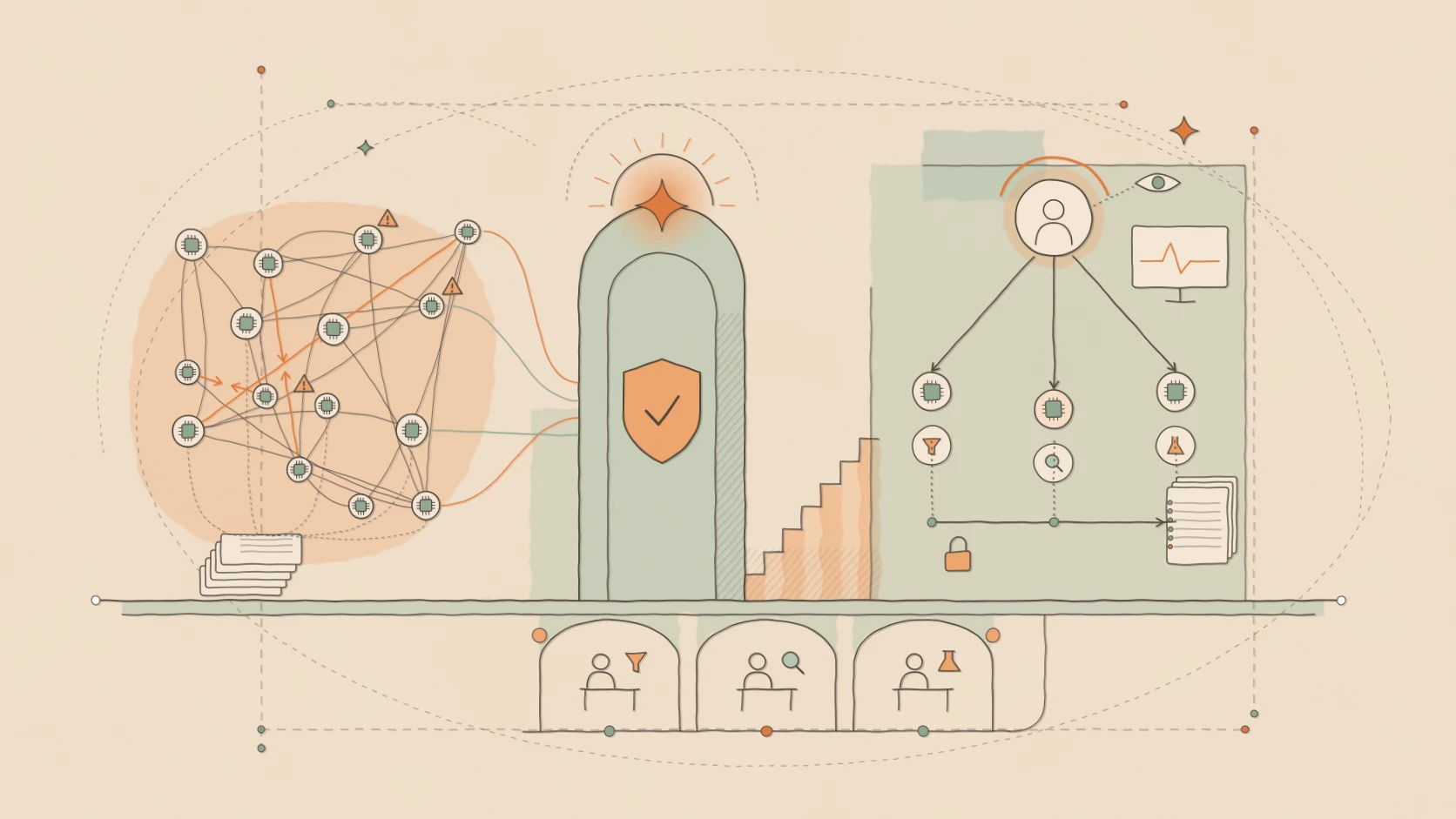
Agents now work on both sides of the security fence. The scarce resource is no longer another agent, but the ability to direct, observe, and constrain several of them at once.
Get the next issue by email
Free. Written by Kyan.
Comments
Have a question about this? Subscribe and reply to any email. The best questions get answered in public.